Smart Sokoban
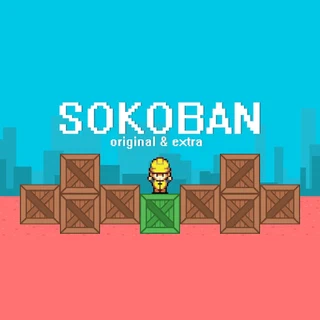
• This application is mainly to realize the sokoban smart game based on Android. Sokoban smart game(https://www.sokoban.jp/) is an ancient game from Japan. Its design purpose is to train people’s logical thinking ability. The game scene is usually set in a small space warehouse, and it is required to place the boxes in the designated location. This requires players to skillfully use limited space and passages, and reasonably arrange the position and movement order of boxes to complete the task.
• The application is based on Eclipse as a development tool, using Java programming technology, XML technology, Handler technology, and combined with SQLite database to design and implement sokoban smart games. Through the realization and integration of various functional modules, we finally successfully developed a sokoban smart game under the Android platform.
• The sokoban smart game designed this time allows players to not only enjoy the joy of completing each level, but also store the player’s game records and score, and at the same time share the player’s game results and joy to other people through Weibo, SMS, people web etc.

I am a research-oriented machine learning systems engineer working on foundation model infrastructure, closed-loop evaluation and optimization systems, and scalable AI platforms. My work focuses on building reliable Model-as-a-Service and Harness-as-a-Service platforms that connect data, training, inference, evaluation, and feedback loops into measurable, continuously improving AI products.
My recent work centers on Model-as-a-Service platforms and high-performance LLM inference. I develop serving infrastructure with vLLM and SGLang across model runtime integration, scheduling and continuous batching, KV-cache and memory management, distributed execution, observability, and reliability. This systems work is closely connected to my research on distributed disaggregated inference, preference optimization, instruction-tuning data selection, multimodal evaluation.
My broader research centers on reinforcement learning infrastructure and reinforcement learning optimization algorithms for scalable AI systems. I am interested in how policy optimization, reward modeling, preference learning, offline RL, simulation environments, distributed rollout systems, and automated evaluation harnesses can be engineered together to improve model behavior. My goal is to build frontier AI systems that learn from feedback efficiently, evaluate progress rigorously, and remain dependable when deployed at scale.