Detailed HTTP/2 header compression algorithm-HPACK

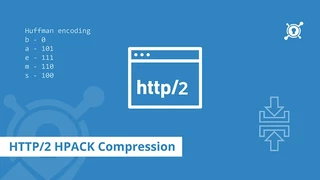
在 HTTP/1.1(请参阅 RFC7230)中,header 字段未被压缩。随着网页内的请求数增长到需要数十到数百个请求的时候,这些请求中的冗余 header 字段不必要地消耗了带宽,从而显着增加了延迟。
SPDY 最初通过使用 DEFLATE 格式压缩 header 字段来解决此冗余问题,事实证明,这种格式非常有效地表示了冗余 header 字段。但是,这种方法暴露了安全风险,如 CRIME(轻松实现压缩率信息泄漏)攻击所证明的安全风险(请参阅 CRIME)。
本规范定义了 HPACK,这是一种新的压缩方法,它消除了多余的 header 字段,将漏洞限制到已知的安全攻击,并且在受限的环境中具有有限的内存需求。第 7 节介绍了 HPACK 的潜在安全问题。
HPACK 格式特意被设计成简单且不灵活的形式。两种特性都降低了由于实现错误而引起的互操作性或安全性问题的风险。没有定义扩展机制;只能通过定义完整的替换来更改格式。
点击阅读更多看全文。

I am a research-oriented machine learning systems engineer working on foundation model infrastructure, closed-loop evaluation and optimization systems, and scalable AI platforms. My work focuses on building reliable Model-as-a-Service and Harness-as-a-Service platforms that connect data, training, inference, evaluation, and feedback loops into measurable, continuously improving AI products.
My recent work centers on Model-as-a-Service platforms and high-performance LLM inference. I develop serving infrastructure with vLLM and SGLang across model runtime integration, scheduling and continuous batching, KV-cache and memory management, distributed execution, observability, and reliability. This systems work is closely connected to my research on distributed disaggregated inference, preference optimization, instruction-tuning data selection, multimodal evaluation.
My broader research centers on reinforcement learning infrastructure and reinforcement learning optimization algorithms for scalable AI systems. I am interested in how policy optimization, reward modeling, preference learning, offline RL, simulation environments, distributed rollout systems, and automated evaluation harnesses can be engineered together to improve model behavior. My goal is to build frontier AI systems that learn from feedback efficiently, evaluate progress rigorously, and remain dependable when deployed at scale.