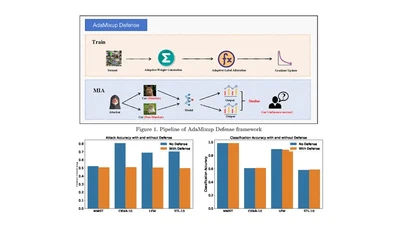
AdaMixup: A Dynamic Defense Framework for Membership Inference Attack Mitigation
Adaptive defense against membership inference attacks.
y.-chen

I am a research-oriented machine learning systems engineer working on foundation model infrastructure, closed-loop evaluation and optimization systems, and scalable AI platforms. My work focuses on building reliable Model-as-a-Service and Harness-as-a-Service platforms that connect data, training, inference, evaluation, and feedback loops into measurable, continuously improving AI products.
My recent work centers on Model-as-a-Service platforms and high-performance LLM inference. I develop serving infrastructure with vLLM and SGLang across model runtime integration, scheduling and continuous batching, KV-cache and memory management, distributed execution, observability, and reliability. This systems work is closely connected to my research on distributed disaggregated inference, preference optimization, instruction-tuning data selection, multimodal evaluation.
My broader research centers on reinforcement learning infrastructure and reinforcement learning optimization algorithms for scalable AI systems. I am interested in how policy optimization, reward modeling, preference learning, offline RL, simulation environments, distributed rollout systems, and automated evaluation harnesses can be engineered together to improve model behavior. My goal is to build frontier AI systems that learn from feedback efficiently, evaluate progress rigorously, and remain dependable when deployed at scale.
Adaptive defense against membership inference attacks.
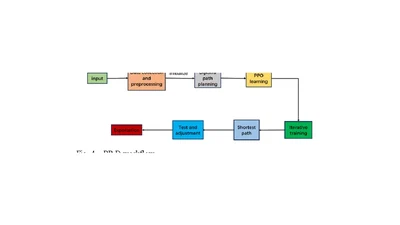
Reinforcement learning for warehouse robot navigation in complex layouts.
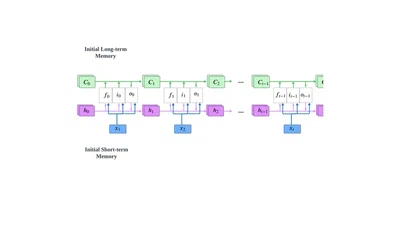
LSTM modeling for 30-day hospital readmission prediction.
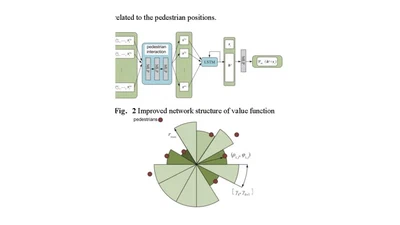
Deep reinforcement learning for obstacle avoidance in warehouse robotics.

This is Cookbook about solutions to LeetCode by Go, 100% test coverage, runtime beats 100%. Now it has obtained 520 solutions.


Introduce SegmentTree data structure in ACM-ICPC, and application of SegmentTree.
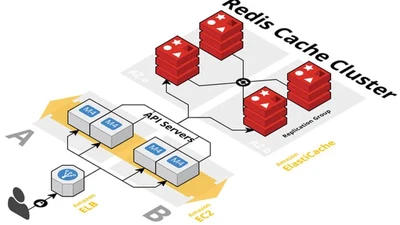
Introduce Distributed theory in Redis Synchronization, and Conflict-free Replicated Data Type.
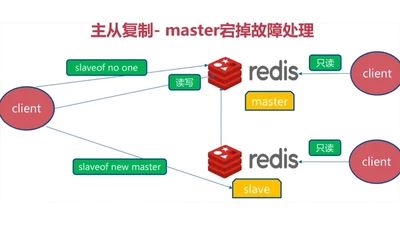
Introduce common use methods and design ideas of redis.
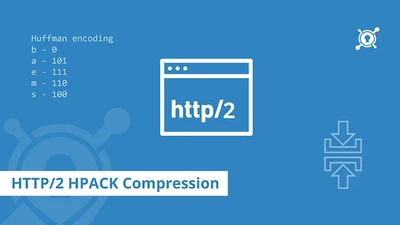
In HTTP/1.1 (see [RFC7230]), the header field is not compressed. As the number of requests within a web page grows to the point where tens to hundreds of requests are needed, …

How to use golang to build a high-concurrency and high-performance Message Streaming System? Let me tell you.